

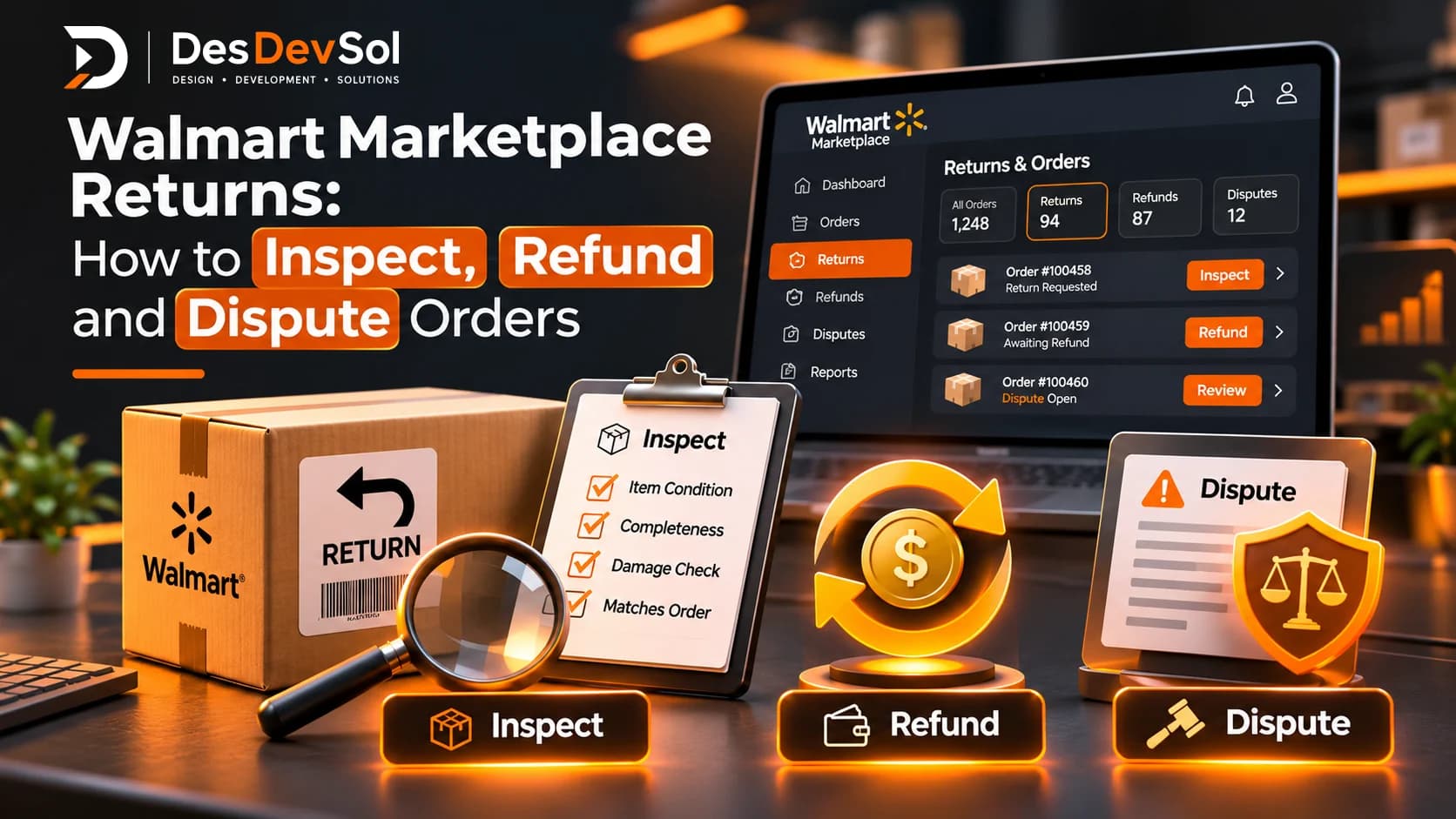
Walmart Marketplace returns can move quickly from a customer request to a refund, even while your team is still checking the returned item. If you sell through Walmart Marketplace, the practical challenge is knowing which returns need action, what to inspect, and when a dispute is appropriate.
Know which returns you are responsible for
Start by separating seller-fulfilled orders from orders handled through Walmart Fulfillment Services (WFS). Their return workflows are not identical. For seller-fulfilled orders, review your return center, label settings, product exemptions and the Returns dashboard in Seller Center. Do not assume the same rules apply to every product.
Walmart's seller-fulfilled returns policy describes a minimum return window for most eligible items, alongside exceptions for certain products and shipping arrangements. Check the current policy and the specific order before deciding how to respond.
Set up a daily return review
Assign one person to review new and received returns every business day, with backup coverage during absences. For each case, record the order number, return reason, tracking status, return date, item condition, action owner and next deadline. A simple shared tracker is enough to start.
Keep three working groups: returns in transit, returns received and awaiting inspection, and cases needing a refund or dispute decision. This prevents an item that arrived yesterday from getting lost among newly requested returns.
Inspect received items before the deadline
Walmart's standard-refund instructions say that when a standard return arrives at your return center and has not already been automatically refunded, the seller must refund it within 48 hours of receipt. Walmart may issue the refund if the seller does not act in time. The exact route depends on the return type, so confirm the case status first.
When a parcel arrives, match its label and tracking to the order. Check the product identifier, quantity, accessories, visible condition and packaging. Photograph any mismatch before the item is moved or repacked. Record the time of receipt so the team can prioritize the case accurately.
For example, a returned kitchen appliance might arrive without its power adapter. Photograph the contents together, record the missing part and compare them with the original listing and order. This evidence may matter if the case meets Walmart's dispute rules.
Decide whether to refund or dispute
For a normal eligible return, follow the refund workflow shown in Seller Center. For an incorrect item, missing parts or an unacceptable condition, first check whether the case qualifies for a dispute. A customer choosing to return an eligible item is not, by itself, grounds to refuse the return.
Walmart's return dispute instructions describe a 48-hour inspection period and a possible dispute window of up to 45 days from the return date. They also identify situations where photographs, labels and tracking evidence are needed. Eligibility and deadlines should be verified against the current case; submitting a dispute does not guarantee reimbursement.
Keep returned inventory from creating a second problem
A return is not finished when the customer receives a refund. Mark each physical unit as sellable, requiring inspection or repair, or unsellable. Never put damaged or incomplete stock back into available inventory simply because the order has closed.
If you also sell the same products elsewhere, make sure your stock records reflect the return only after the item has been checked. That helps prevent an apparently available unit from being sold twice. For more on this risk, see How to Prevent Overselling Across Multiple Marketplaces.
Review the patterns, not just individual cases
Once a week, group returns by reason and product. A cluster of wrong-item complaints may point to a picking or labeling issue. Repeated missing-part reports may reveal packaging problems. High return rates on a particular variation may suggest that its product description or images need attention.
Keep the review small: identify one recurring problem, assign an owner and check whether the corrective action reduces similar cases over time. This turns returns into useful operational feedback rather than an endless stream of separate tickets.
A practical checklist for your next return
- Confirm the order's fulfillment method and applicable return rules.
- Check whether Walmart has already issued the refund.
- Record receipt time, tracking and product condition.
- Capture photographs of missing, damaged or incorrect contents.
- Complete an eligible refund or review dispute eligibility within the applicable deadlines.
- Update inventory only after inspecting the returned item.
- Log the return reason for your next weekly operations review.
If managing returns, listings and stock across channels is taking too much time, DesDevSol's Walmart Seller Services can help you review and organize the workflow.